
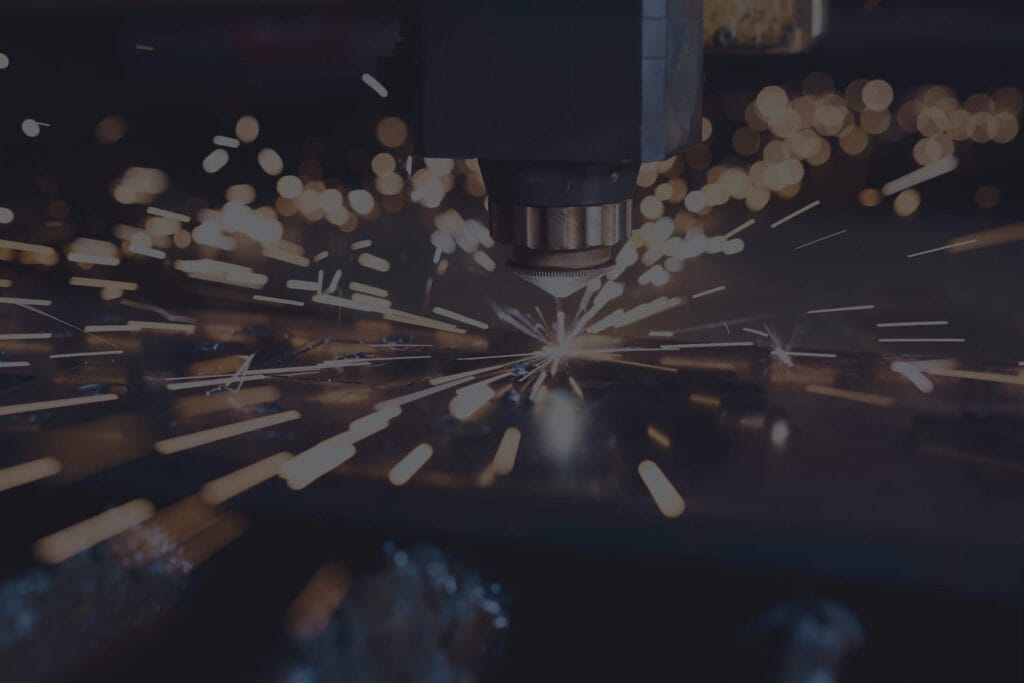
In precision manufacturing, the distinction between laser welding and laser cutting technologies drives critical investment decisions. As manufacturing demands evolve and complexity increases, understanding these two laser-based processes becomes essential for optimizing production capabilities and maintaining competitive advantage.While both technologies harness concentrated laser power, their fundamental purposes and applications differ significantly.
Whether you’re expanding your facility’s capabilities or upgrading existing equipment, knowing exactly how laser welding machines differ from laser cutting systems can substantially impact your operational efficiency and product quality. Let’s examine the key distinctions that will help you align these technologies with your specific manufacturing requirements.
Laser Welding Machine: Precision Joining for Enhanced Performance and ROI
A laser welding machine utilizes a highly focused laser beam to melt and fuse materials, creating a strong, permanent bond. This advanced welding technology offers significant advantages over conventional methods like MIG welding, TIG welding, and arc welding:
Unmatched Precision & Accuracy
The highly concentrated energy of the laser beam results in extremely precise welds, minimizing distortion and ensuring consistent quality. This is particularly crucial in applications requiring tight tolerances and intricate designs. Automated laser welding systems further enhance accuracy and repeatability. The resulting welds are often described as beautiful welding, showcasing the technology’s capabilities.
Enhanced Material Versatility
While laser welding excels with metals, its capabilities extend to certain thermoplastics and even dissimilar metal combinations. This broad material compatibility is a significant advantage for manufacturers working with diverse materials. Welding dissimilar metals, for example, is often easier and more precise with a laser welding machine. Welding nickel sheets is another example of a material that benefits from laser welding’s precision.
Superior Weld Strength & Durability
The deep penetration and controlled heat input of laser welding produce strong, durable welds that resist cracking and fatigue. This contributes to increased product lifespan and reduced maintenance costs.
Minimized Heat Affected Zones (HAZ)
The localized heating in laser welding results in smaller HAZs compared to traditional methods. This reduces the risk of material degradation and maintains the integrity of the base materials.
Increased Production Efficiency
Automated laser welding systems significantly increase production speed and throughput, reducing overall processing time and labor costs. This is especially advantageous for high-volume manufacturing.
Scalability and Versatility
Laser welding solutions range from compact handheld units for repairs and jewelry work to sophisticated automated systems for mass production. Modern systems incorporate advanced features like fiber lasers, variable current adjustment, and IGBT inverter technology for enhanced control and performance. Whether you need a simple 110V welder for small tasks or a fully automated system for high-volume production, solutions are available to match your specific requirements and scale of operations.
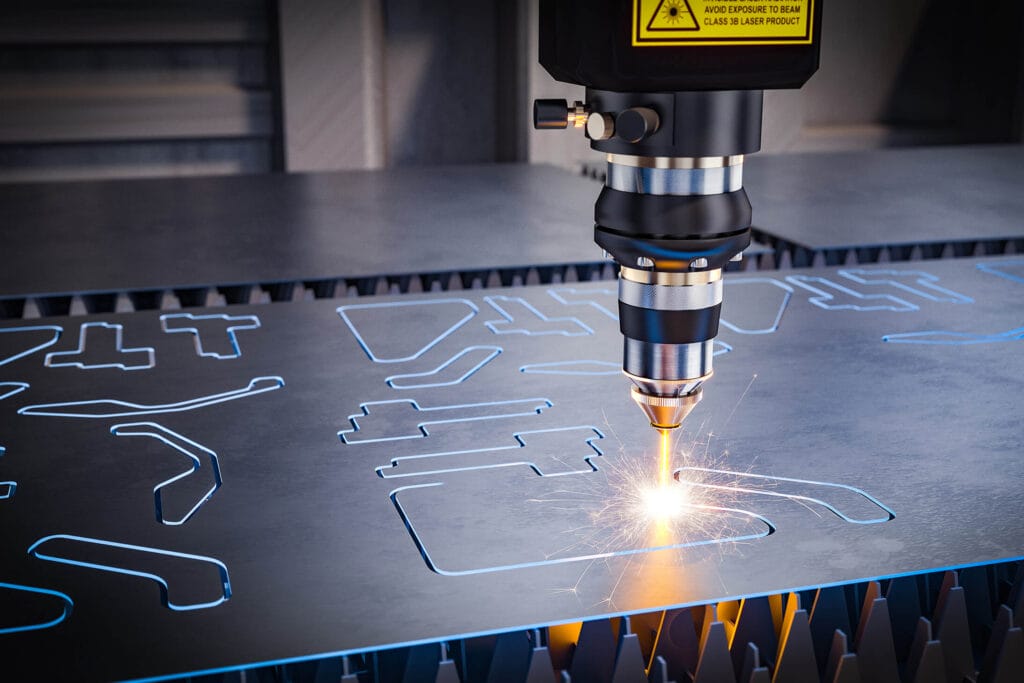
Laser Cutting: Precise Separation for Design Flexibility and Streamlined Production
Laser cutting employs a laser beam to vaporize or melt material, creating precise, clean cuts with exceptional accuracy. This technology offers significant advantages for manufacturers seeking streamlined production and design flexibility:
- Exceptional Cutting Precision: Laser cutting delivers extremely accurate and detailed cuts, allowing for intricate designs and complex geometries. This is particularly useful for creating components with intricate features or delicate designs.
- Enhanced Design Flexibility: The ability to create complex shapes and patterns opens up new possibilities for product innovation and differentiation. Manufacturers can realize designs previously impossible with traditional cutting methods. A 3D laser, for example, can create incredibly complex shapes.
- Improved Efficiency & Throughput: Automated laser cutting systems drastically reduce processing time compared to manual methods, significantly increasing throughput and reducing labor costs.
- Reduced Material Waste: The precision of laser cutting minimizes material waste, leading to significant cost savings, particularly when working with expensive or specialized materials.
- Versatility in Material Processing: While commonly used for metals, laser cutting can process various materials, including plastics, wood, fabrics, and composites, expanding its applications across diverse industries.
Head-to-Head Comparison: Laser Welding Machine vs. Laser Cutting
Understanding the distinct characteristics of laser welding machines and laser cutting systems is crucial for informed decision-making. Below, we’ve compiled a comprehensive comparison of key features to help you evaluate which technology best suits your manufacturing requirements:
Feature | Laser Welding | Machine Laser Cutting |
Primary Function | Joining materials | Separating materials |
Process | Melting and fusing materials | Vaporizing or melting material to create cuts |
Precision & Accuracy | Extremely high, minimal distortion | Extremely high, clean, defined edges |
Speed & Throughput | High, especially with automated systems | High, especially with automated systems |
Material Versatility | Wide range of metals, some thermoplastics | Wide range of metals, plastics, wood, fabrics, etc. |
Typical Applications | Automotive, aerospace, medical, electronics | Sheet metal fabrication, prototyping, signage, textiles |
Capital Expenditure | High for advanced systems, lower for simpler units | Varies greatly depending on system size and features |
Operational Expenditure | Consumables, maintenance, operator training | Consumables, maintenance, operator training
|
Guiding Your Procurement Decisions: Key Considerations
Selecting the appropriate technology requires careful consideration of several factors:
- Production Volume & Scale: Automated systems are highly efficient for mass production, while smaller, more manual systems may suffice for lower volumes.
- Material Specifications: Ensure compatibility with the chosen technology. Consider material thickness, properties, and compatibility with laser wavelengths.
- Required Precision & Tolerances: Both technologies offer high precision, but the level of accuracy needed will dictate the system specifications.
- Budgetary Constraints: Assess both CAPEX (initial investment) and OPEX (ongoing operational costs) to determine the most cost-effective solution over the technology’s lifespan.
- Long-Term Scalability: Consider your future needs and the scalability of the chosen technology. Will your production volume increase? Will you need to process different materials in the future? Will you need additional welding tools?
- Supplier Selection & Support: Choose a reputable supplier with a proven track record, excellent customer support, readily available maintenance, and comprehensive training programs. Consider the availability of parts and support for your chosen welder machine.
Strategic Sourcing for a Competitive Edge
Laser welding machines and laser cutting systems represent significant advancements in manufacturing technology. By carefully evaluating your specific needs, considering the factors outlined above, and selecting a reliable supplier, you can ensure your organization utilizes the most effective technology to optimize your processes, enhance product quality, and gain a competitive advantage in the market.
Mikon Machinery offers advanced laser cutting solutions tailored to meet your specific needs. Our expertise lies in providing precise, efficient, and cost-effective cutting technology. Let us help you optimize your manufacturing processes.
Contact Mikon Machinery today for a consultation to discuss your specific requirements and explore how our advanced laser cutting solutions can elevate your manufacturing processes. We’ll help you determine the best fit for your needs and budget.